
Are You Building a Home Service Business - or Just Owning Your Job?
Are You Building a Home Service Business—or Just Owning Your Job?
By Joe Crisara, Author of What Should We Do? and Co-Founder of Service MVP
There's a point many home service owners eventually reach.
You have customers.
You have revenue.
You own the truck.
You own the equipment.
Maybe you've even hired another technician.
But if the phone rings, you answer it.
If there's a problem in the field, you solve it.
You do the estimates.
You handle the billing.
You check the schedule.
You deal with the marketing.
And when everybody else goes home, you finish whatever didn't get done during the day.
Technically, you own a business.
But here's a harder question:
Did you build a business - or did you buy yourself a very expensive job?
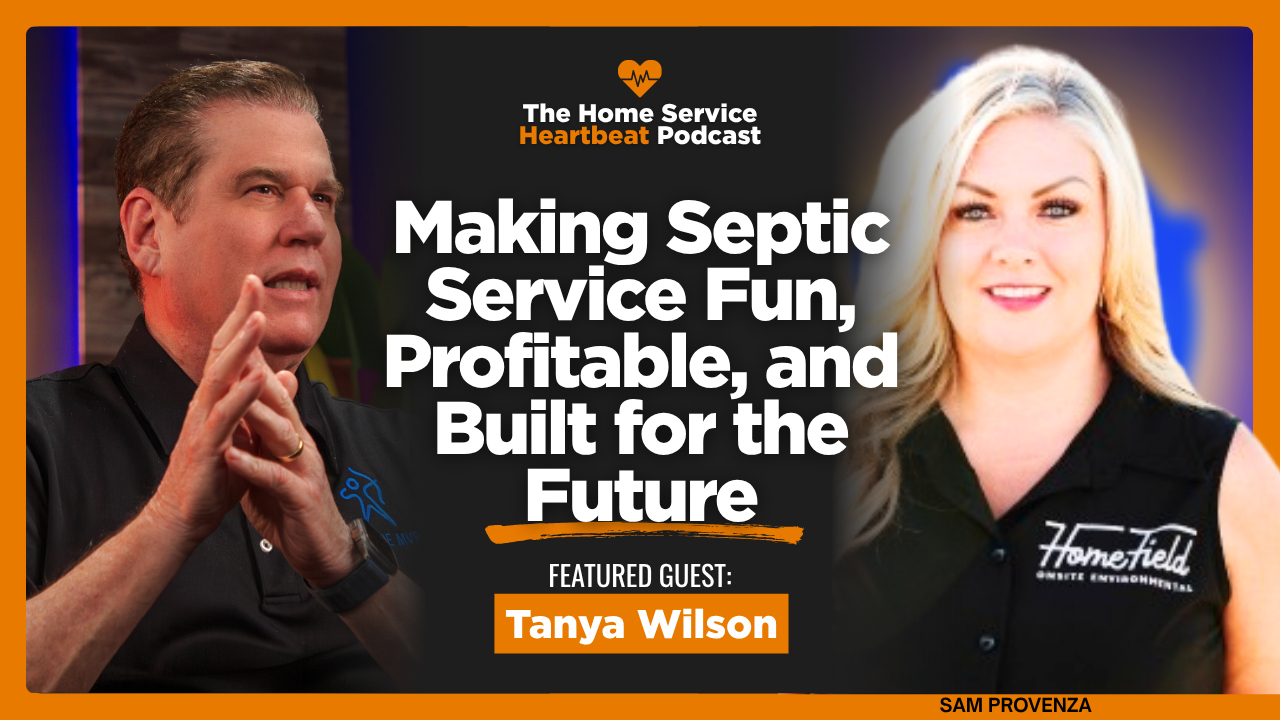
That question came up during my recent conversation with Tanya Wilson of HomeField East Valley on the Home Service Heartbeat Podcast.
And Tanya knows something about building service businesses.
She entered the septic industry in 2009 with a marketing background and very little knowledge about septic itself. The first business she helped build reached seven figures within about three years. Years later she built Priority Pumping, which became HomeField East Valley, and became part of the team building HomeField Onsite Environmental into a broader network of septic businesses.
But one of the most valuable lessons Tanya shared had nothing to do with septic.
It applies to almost every home service business.
The Owner Can't Be the Entire System
Tanya sees the same problem repeatedly in her industry.
An owner has a truck.
They're doing the work.
They're answering their cell phone between jobs.
They're handling billing at night.
They're trying to do the marketing themselves.
They know they need help, but they keep telling themselves:
"I can't afford to hire somebody yet."
Tanya's response is the opposite:
At some point, you can't afford not to.
She learned that lesson herself.
One of the mistakes she says she made early was waiting too long to bring in support that would allow her to work on the business instead of constantly working in it.
That's the transition many contractors struggle to make.
Because hiring someone feels like adding expense.
But the right employee shouldn't simply create another expense.
They should create capacity.
Capacity for more customers.
Capacity for better follow-up.
Capacity for better marketing.
Capacity for better leadership.
And, perhaps most importantly, capacity for the owner to finally start doing the work that only the owner can do.
Your Team Builds the Business
Tanya said something during our conversation that I really liked:
"We don't build a business. Our team builds the business."
Think about that.
The owner can create the vision.
The owner can establish the standards.
The owner can provide the training.
But eventually other people have to deliver it.
Someone has to answer the phone.
Someone has to dispatch the call.
Someone has to show up at the customer's home.
Someone has to perform the work.
Someone has to follow up.
Someone has to take care of the truck.
Someone has to collect the money.
That's when your company becomes bigger than you.
And that's when leadership becomes more important than simply being great at the trade.
Stop Looking Only for People Who Already Know Your Trade
Here's another lesson I loved from Tanya.
Most of the people on her team didn't come from the septic industry.
She's brought people in from HVAC, oil fields, medical backgrounds and other walks of life.
Why?
Because Tanya believes she can teach skills.
She's looking first for people.
During an interview, she wants to know:
Are you positive?
Are you open to learning?
Are you accountable?
Can you work autonomously?
Do you have goals?
Are you trying to build something in your own life?
She even tells candidates that they're interviewing her as much as she's interviewing them.
That's a very different hiring conversation.
Instead of:
"Can this person already do everything I need?"
Try asking:
"Is this somebody worth developing?"
That becomes especially important in trades struggling to find experienced workers.
Sometimes the answer isn't finding more trained technicians.
It's becoming better at creating them.
Culture Isn't Pizza on Friday
Home service companies talk a lot about culture.
But culture isn't the company picnic.
It isn't a slogan painted on the wall.
And it definitely isn't pizza.
Culture is what people experience when they come to work.
Tanya told me that when she asks candidates what they want from a boss, some give her an incredibly low bar:
"I just don't want to be yelled at."
Think about what that tells us.
Somebody has spent enough time in a bad work environment that simply being treated with dignity feels like an employment benefit.
Tanya approaches it differently.
She expects accountability.
She expects people to perform.
She expects them to work toward goals.
But she also wants employees to feel empowered in their positions rather than micromanaged.
Her team even creates personal and professional goals each year and puts them on a board. Tanya described watching employees remove goals after paying off debt, saving for a baby, buying a home or accomplishing something else important in their lives.
That's culture.
The business is helping the employee build something too.
Systems Turn Good Intentions Into Consistency
Great people alone aren't enough.
You also need systems.
HomeField East Valley has built a defined customer-service process that its technicians follow on service calls.
Why?
Because customers shouldn't receive a completely different experience depending on which technician happens to arrive.
The technicians create a strong first impression.
They introduce themselves.
They explain what's happening.
They walk customers through what they're doing.
They educate the homeowner about a system many people know almost nothing about.
And through that education, technicians often discover additional ways to improve the customer's system.
That's an important distinction.
Education creates opportunity.
The technician doesn't have to walk into the home thinking:
"What can I sell?"
They can think:
"What can I discover, and what does this customer need to understand?"
That's very close to what we teach at Service MVP.
When technicians slow down, evaluate the whole situation and educate the customer, they often discover opportunities that would have been invisible if they had simply fixed the obvious problem and rushed to the next call.
Build the System Before You Need It
Near the end of our conversation, I asked Tanya what advice she would give her younger self.
Two answers stood out.
Hire earlier.
And:
Build systems before you need the systems.
That's great advice.
A two-person company may think:
"Why do we need a process? We both know what to do."
But that's exactly when you should document it.
Who's responsible for answering the phone?
How should the call be handled?
How do you schedule?
What happens before the technician arrives?
What's the service-call process?
How do you follow up?
Who handles an unhappy customer?
How is inventory managed?
What happens to an unsold opportunity?
Because when employee number three arrives, you shouldn't have to reinvent the company.
And when employee number ten arrives, you definitely shouldn't.
Growth magnifies whatever you've already built.
If you have good systems, growth gives those systems leverage.
If everything lives inside the owner's head, growth creates chaos.
Even the Truck Needs a System
I loved how far Tanya takes this.
Her technicians operate expensive pump trucks, trailers, excavators and inspection equipment.
So vehicle and equipment maintenance isn't left to:
"Hey guys, remember to take care of the trucks."
There are pre-checks.
Post-checks.
Inventory processes.
Asset management.
Maintenance procedures.
Outside support.
And KPIs tied to fleet maintenance.
Her reasoning is simple: the equipment is what allows the technician to earn a living and the company to serve customers. If it isn't operating, neither is the revenue opportunity.
That ties directly into something we've been talking about recently at Service MVP:
A KPI should tell you what behavior needs attention.
Numbers aren't there simply to fill a dashboard.
They're there to help leadership see what needs to happen next.
Modernize the Business, Not Just the Equipment
One of the fascinating parts of Tanya's story is watching an old-school industry modernize.
She remembers handwritten invoices.
Printed maps.
Manually moving information between systems.
Today, she's talking about automation, software, AI and even remote monitoring.
In some markets, HomeField is already working with connected septic technology that can notify homeowners and service providers when certain system conditions trigger an alert.
That's a big change.
But technology isn't the strategy by itself.
Technology supports the strategy.
Better communication.
Better maintenance.
Better customer education.
Better consistency.
Better service.
That's what technology should do.
Recurring Revenue Starts With Ongoing Value
Tanya also talked about memberships.
That's particularly interesting in septic because many homeowners don't think about their system until something goes wrong.
Out of sight.
Out of mind.
But the service provider knows maintenance matters.
So instead of waiting for an emergency, a membership can help create an ongoing relationship with the homeowner while making maintenance easier to manage.
That's the larger lesson for home service companies.
A membership shouldn't exist simply because recurring revenue is good for the contractor.
It should create ongoing value for the customer.
If both sides benefit, retention becomes much more natural.
The Real Business Is the One That Can Operate Without You Doing Everything
Whether you own an HVAC company, plumbing company, electrical company, roofing company, garage door company, restoration company - or a septic company - the challenge eventually becomes the same.
You can't be everything forever.
You need people.
You need systems.
You need standards.
You need training.
You need accountability.
And you need to create an environment where good people actually want to stay and grow.
Tanya's industry may be unusual.
The business lesson isn't.
If the company depends on you personally performing every important function, you haven't finished building the business yet.
That's not a criticism.
It's simply the next stage.
Hire before you're completely overwhelmed.
Build systems before you're desperate for them.
Train people instead of assuming you'll magically find them.
Create accountability without treating people like numbers.
And build a company that creates opportunity for customers, employees and the owner.
That's how you move from owning your job to building a business.
Watch Tanya's Full Home Service Heartbeat Conversation
There's much more in my conversation with Tanya about hiring, women in the trades, customer education, technology, leadership and where the septic industry is headed.
WATCH THE FULL HOME SERVICE HEARTBEAT EPISODE →
Ready to Build a Business That Doesn't Depend on You Doing Everything?
Service MVP Coaching helps home service owners build the leadership, systems, training and accountability needed to develop their people and create a more consistent, profitable company.
Learn More About Service MVP Coaching →
