By Joe Crisara, America’s Service Sales Coach
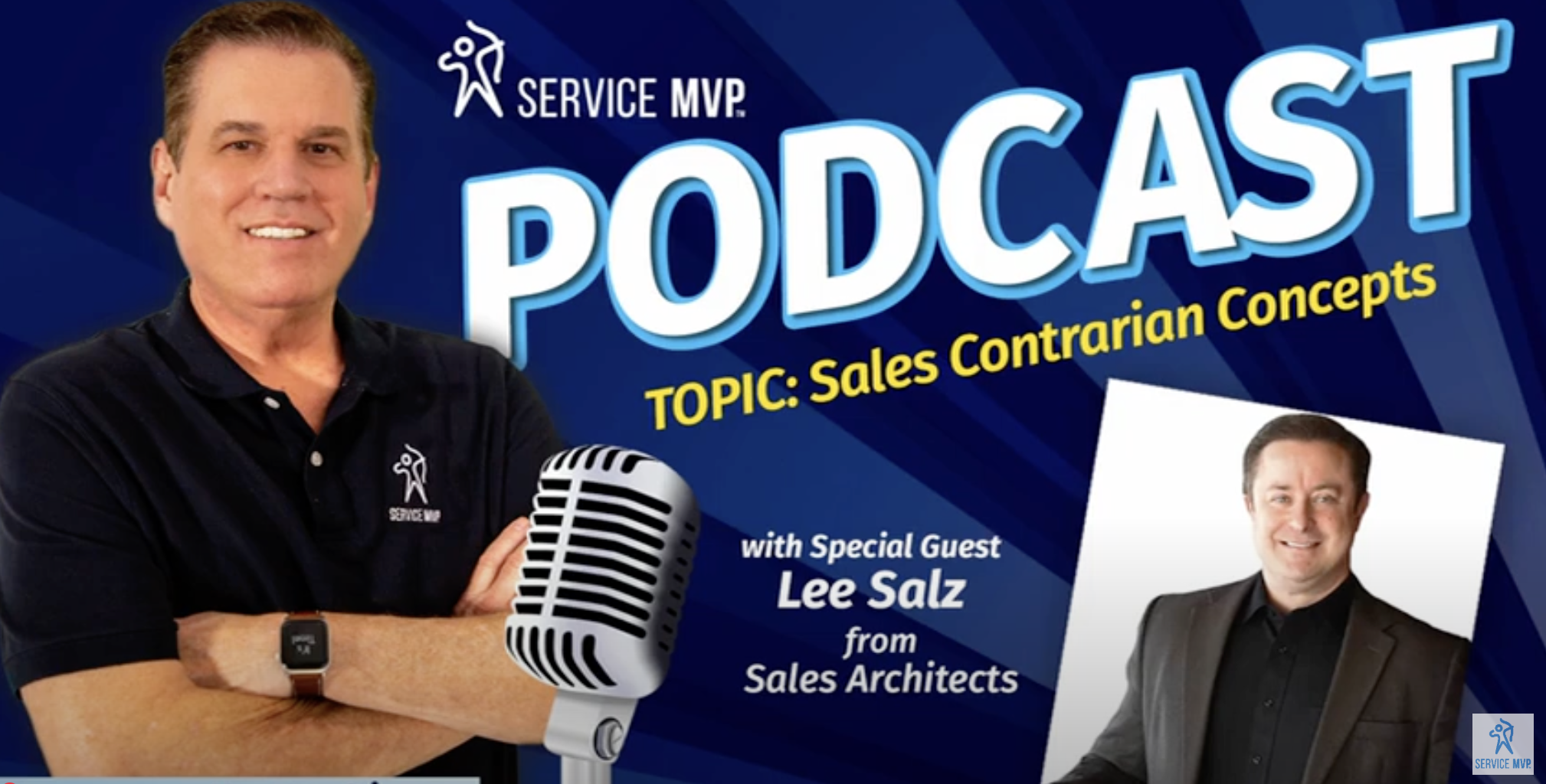
In the world of sales coaching and service training, I’ve had the honor of connecting with some of the most insightful minds in the business. One of those is Lee Salz, author, consultant, and self-proclaimed “sales contrarian.” After knowing of Lee for over a decade, we finally sat down face to face to unpack some truly transformative ideas that every service business owner and salesperson should understand.
Lee’s approach challenges conventional thinking, and in this blog, I want to walk you through some of the most powerful contrarian concepts we discussed, ideas that can help you hire more effectively, sell with greater empathy, and unlock more value from every customer relationship.
Watch the full episode here: Sales Contrarian with Lee Salz
or
Listen to the podcast here: Sales Contrarian with Lee Salz
There’s No Such Thing as a Great Salesperson
That might sound blasphemous coming from someone like me. But Lee makes a compelling case: if "great" salespeople really existed as plug-and-play assets, then why do so many fail when they move companies?
Success in sales isn’t about finding the mythical “great” seller. It’s about identifying individuals with the potential to be great in a specific role within the unique culture, expectations, and performance factors of your company.
Key takeaway:
Before hiring anyone, define what success looks like in that specific role. Are you looking for someone who can prospect, write clearly, handle complex objections, or build trust quickly? Match your hiring process to your real needs, not a résumé.
Want to learn more about Lee, click here: Sales Architects
The Performance Factor Portfolio
Lee introduces a powerful tool called the “Performance Factor Portfolio.” It involves listing all the factors that determine success or failure in a sales role then ranking them by importance and deciding which you are (or aren’t) willing to teach.
For example:
If writing skill is critical and you’re not going to teach it, it becomes a dealbreaker.
If resilience is non-negotiable but unteachable, you need to evaluate for it early.
Tip: Use scenario-based writing samples as part of your interview process. It doesn’t cost a dime and gives you insight into mindset, writing ability, and whether the candidate thinks the way your company needs them to.
Empathetic Expertise: How You Say It Matters
Lee shared a deeply personal story about putting down a family dog and calling a veterinary service. What struck him and me was how the person on the other end of the line never used clinical terms like “dog” or “animal,” but referred to their pet as a family member. Her tone, pacing, and empathy made a painful experience more humane.
That’s a perfect example of what Lee calls empathetic expertise, the ability to combine technical knowledge with emotional intelligence.
Lesson for service pros: Customers don’t just buy services, they buy confidence, peace of mind, and empathy. How you sound, how you listen, and the words you choose create the value behind your offer.
I invite you to join the Service MVP Club, your all-in-one platform for weekly live coaching, self-paced training, and the tools you need to grow your confidence, communication, and results.
Start your free trial today: Service MVP Club
You’re Only as Good as Your Next Sale
Forget “you’re only as good as your last sale.” That mindset keeps you stuck in the past. The real pros, as Lee says, focus on the next sale and on how every transaction can yield at least two more.
Think referrals. Think upsells. Think long-term relationships. Think like a business developer, not just a deal-closer.
Mantra to live by:
“Every deal must yield two more.”
Sales Is Not a Numbers Game
If you believe sales is purely a numbers game, you’ll treat people like numbers. And no one wants to feel like a number.
Lee reframes this by encouraging a balanced approach, combining the right volume of activity with deep research and personalized outreach. When you make each prospect feel like they’re your only client, your results will speak for themselves.
Objections Aren’t a Fight, They’re Feedback
Too often, sales training teaches people to "overcome" objections, creating an adversarial dynamic with customers. Lee and I agree: that’s the wrong approach.
Instead, view objections as concerns or even constructive criticism. When a customer pushes back on price, they’re really telling you: “I don’t yet see the value.”
That’s your cue to bridge the value gap, not drop your price.
The E.A.S.E. Framework for Handling Concerns
Lee’s four-step method for navigating objections is pure gold. It’s called E.A.S.E.:
E – Empathize: Show you’ve heard them (“I appreciate you sharing that.”)
A – Ask: Understand the real concern behind the pushback
S – Share: Provide information that bridges the value gap
E – Ensure: Confirm that you’ve truly addressed their concern
Most salespeople skip straight to “Share.” But without empathy or clarity, you’re throwing spaghetti at the wall.
Give First, Network Second
Here’s one of my favorite takeaways from Lee: most people wait to network until they need something. That’s the wrong time.
The best time to network is when you have something to give.
At Service MVP, we’ve seen this firsthand. When we show up to events giving away value—books, insights, training—we generate more leads and deeper connections than any hard-sell strategy ever could.
Final Thoughts
Lee Salz reminded meand hopefully reminds all of us, that true sales mastery isn’t about tactics. It’s about philosophy. Empathy, differentiation, understanding performance drivers, and building value are the real keys to sales success in any industry.
Until next time,
Joe Crisara
America's Sales Coach
Founder, Service MVP
