
What Happens When You Show the Customer Everything?
What Happens When You Show the Customer Everything?
By Joe Crisara, Author of What Should We Do? and Co-Founder of Service MVP
There is an information imbalance in almost every home service call.
The technician or contractor understands the equipment.
They know what the parts cost.
They understand the labor involved.
They know what can go wrong.
They know the difference between one solution and another.
And the homeowner?
They may be making this decision for the first time in their life.
That imbalance becomes especially obvious when someone needs a new roof.
During my recent Home Service Heartbeat conversation with Mike Harvey, founder of SkyeVantage, Mike pointed out that most homeowners may purchase only one or two roofs in their lifetime.
They don't know what they don't know.
The contractor does.
And that creates an important question for every home service professional:
What are you going to do with that information advantage?
You can use it to control the sale.
Or you can use it to help the customer make a better decision.
What If More Information Doesn't Hurt the Sale?
Contractors sometimes worry about giving customers too much information.
What happens if they know what the materials cost?
What happens if we explain the labor?
What happens if we show them different solutions?
What happens if they see exactly what we see?
Won't they just start picking apart the price?
Maybe.
But Mike built much of his business around the opposite idea:
Transparency can create trust.
Mike spent 25 years in corporate America scaling sales systems and teams before entering the roofing industry. Within nine months, he and a business partner had generated $1 million in revenue in a traditional roofing business.
But one particular sale bothered him.
Mike sold a roof for approximately $14,000 that he said cost his company about $6,200 to install. The homeowners were happy with the purchase, but they had pulled money from their 401(k) to pay for it.
Mike began questioning the traditional roofing sales process and eventually decided he wanted to build something different.
His answer became SkyeVantage.
But there's a bigger lesson here than roofing.
What happens when the goal of the sales process changes from controlling the information to helping the customer understand it?
The Customer Shouldn't Need to Become an Expert to Trust You
Think about what we ask homeowners to do.
A technician walks into the house.
They inspect something the homeowner probably doesn't understand.
They diagnose a problem the homeowner probably can't verify.
Then they present a price the homeowner has no idea how to evaluate.
And we wonder why customers sometimes say:
“I need to get another estimate.”
Of course they do.
They're trying to create certainty.
Mike's approach is to give homeowners more of that certainty upfront.
SkyeVantage uses roofing technology to produce a detailed report showing measurements such as roof pitch, rake and valleys. The company then walks the homeowner through what those measurements mean and how they affect the project.
Mike described showing customers the flat fee for the service, material costs, dumpster expense, labor and permit costs rather than simply giving them one all-in number.
That's a very specific business model, and it won't necessarily be the right pricing model for every home service company.
But the principle underneath it applies almost everywhere:
The customer shouldn't have to understand your trade to understand why your recommendation makes sense.
That's our responsibility.
Transparency Doesn't Mean You Have to Defend Your Price
This is where I want to make an important distinction.
Transparency does not mean apologizing for profit.
It doesn't mean contractors should sell materials at cost.
It doesn't mean every home service company should itemize its pricing exactly the way SkyeVantage does.
And it certainly doesn't mean there is something wrong with charging enough to operate a healthy, profitable business.
Your customer isn't just paying for a part.
They're paying for the technician.
Training.
Vehicles.
Insurance.
Tools.
Office support.
Technology.
Marketing.
Warranties.
The ability to answer the phone.
The ability to stand behind the work.
And, yes, the company needs to earn a profit.
Transparency isn't about defending every dollar.
It's about helping the customer understand what they're receiving in exchange for the dollars they're spending.
That's value.
Don't Just Give a Price. Give the Customer Context.
Suppose I tell you:
“This option is $18,000.”
What can you do with that information?
Not much.
Is $18,000 expensive?
Cheap?
Average?
Does it solve the entire problem?
Is there another alternative?
What happens if you spend less?
What do you gain if you spend more?
A price without context forces the customer to make the easiest comparison available:
Your price versus somebody else's price.
But now imagine the homeowner understands:
Here's what we found.
Here's why it matters.
Here are the available solutions.
Here's what's included.
Here's how these choices differ.
Here's what changes when you move from one solution to another.
Now the conversation isn't simply:
“How much?”
It's:
“Which solution makes the most sense for me?”
That's a much better decision for the customer to be making.
Choices Make Transparency More Useful
One thing Mike and I discussed during the podcast was how SkyeVantage presents different roofing solutions.
Mike described three levels of roofing systems, with changes primarily driven by the materials selected. The homeowner can see what changes between the solutions and what remains the same.
This is where transparency and choices work together.
Giving customers information without choices can still leave them stuck.
Giving them choices without enough information can make those choices confusing.
The goal is to connect the two:
Here's what we discovered.
Here are your choices.
Here's how they're different.
Here's what each one costs.
Which one feels right for you?
At Service MVP, we believe strongly in presenting meaningful options because homeowners have different priorities.
One customer may want the most comprehensive solution available.
Another may want something in the middle.
Another may need an economy solution that solves the immediate concern.
Our job isn't to decide which customer deserves which option.
Our job is to help them understand their choices and let them choose.
Don't Prejudge What the Customer Can Afford
This is one of the easiest traps for technicians to fall into.
You walk into a modest home.
There's an older vehicle in the driveway.
Maybe the homeowner mentions money being tight.
And suddenly the technician begins making decisions for them.
“They're never going to buy that.”
So the technician removes an option before the customer ever sees it.
That might feel helpful.
It isn't.
The technician doesn't know the customer's priorities.
Maybe this is the home they're planning to stay in for 30 years.
Maybe comfort is extremely important to them.
Maybe they're willing to finance the work.
Maybe they've been saving specifically for this project.
Maybe the least expensive option actually is right for them.
We don't know.
That's why choices matter.
Transparency means the customer gets the information.
Pure Motive means we don't become attached to which choice they make.
Diagnosis Has to Come Before the Options
There's another important part of Mike's process that shouldn't get lost in the discussion about pricing.
You still have to understand the problem.
SkyeVantage uses roof-measurement technology to evaluate the characteristics of the roof. After a customer moves forward, Mike says a third-party home inspection company evaluates areas such as the attic, wood condition, intake ventilation and venting. Photos and information are then shared as part of the process.
Why does that matter?
Because an option isn't valuable simply because it costs more.
The solution should connect to something meaningful.
That's something I've taught for years:
Why would somebody choose a better solution if they don't have a problem that matches the solution?
You don't start with six prices and then try to sell your way toward the top.
You start by discovering what's happening.
What does the customer care about?
What did you observe?
What problems exist?
What opportunities exist?
What could improve safety?
Performance?
Reliability?
Efficiency?
Longevity?
Comfort?
Then you build choices around what you've actually discovered.
Diagnosis creates relevance. Options create freedom.
Evidence Is More Powerful Than Persuasion
Mike's process also relies heavily on documentation.
Measurements.
Reports.
Photos.
Inspection information.
Images before, during and after installation.
There's a lesson here for every trade.
If an HVAC technician sees a dirty blower wheel, show the homeowner.
If a plumber finds corrosion, show it.
If an electrician discovers an unsafe condition, show it.
If a chimney technician finds deterioration, show it.
If a restoration professional discovers moisture, show it.
Don't make customers blindly trust your description of something they can't see.
Help them see what you see.
When the evidence is clear, the technician doesn't need to become a master persuader.
The conversation becomes educational.
“Here's what I found.”
“Here's why it matters.”
“Here are some ways we can address it.”
“What would you like to do?”
That's a very different experience from pressure.
Trust Isn't Created by Saying “Trust Me”
One of Mike's core values at SkyeVantage is transparency.
Another part of his model is something they call Training for Trust.
Because much of their customer interaction happens virtually, Mike explained that licensees are trained to make an intentional connection with homeowners during the initial phone conversation and Zoom meeting.
The objective is to understand the customer's needs and wants—not simply race toward a close. Mike specifically said homeowners aren't going to receive a hard close through their process.
I love the name Training for Trust because trust isn't a script.
You can't simply teach someone to say:
“We're a company you can trust.”
The customer decides whether they trust you.
Our job is to behave in ways that make trust possible.
Listen.
Ask questions.
Tell the truth.
Show the evidence.
Explain the choices.
Be clear about the price.
Don't hide important information.
Don't create fake urgency.
Don't manipulate the customer into choosing what you want.
And don't disappear once they say yes.
Technology Should Give Customers More Clarity, Not Less Humanity
Mike's model also raises an interesting question about where home service is headed.
Traditionally, the industry has depended heavily on face-to-face interaction.
Mike is demonstrating that portions of a major home improvement purchase can happen differently.
Technology can measure.
Software can calculate.
Photos can document.
Video can communicate.
Virtual meetings can replace some in-person appointments.
AI will continue expanding what's possible.
That doesn't make the human element less important.
I think it makes it more important.
As technology makes information easier to access, the value of the home service professional increasingly becomes helping customers understand what that information means for them.
Technology can provide data.
People provide context.
And the best home service companies will learn how to use both.
Selling Without Pressure Doesn't Mean You Stop Selling
This distinction matters.
Sometimes people hear phrases like customer choice, transparency or Pure Motive and assume we're saying technicians shouldn't sell.
That's not what I mean.
If you discover something that could make the customer's home safer, you should tell them.
If there's an option that could improve reliability, you should present it.
If there's a better solution that could prevent another problem six months from now, the homeowner deserves to know about it.
If financing could make a more comprehensive solution affordable, explain that choice.
Withholding a solution isn't Pure Motive.
Neither is pushing one.
Pure Motive means giving the customer everything they need to make an informed decision while releasing your attachment to what that decision needs to be.
That's selling.
You're just putting the customer - not the close - at the center of it.
What Happens When You Show the Customer Everything?
You may lose some customers.
Transparency doesn't guarantee a yes.
Choices don't guarantee the customer picks your premium option.
Great communication doesn't mean every homeowner hires you.
And that's okay.
The goal isn't to create a process that guarantees you get what you want.
The goal is to create a process that helps the customer make a decision they feel good about.
That's why I found my conversation with Mike so interesting.
His business model is different from what many traditional roofing companies use.
It's different from the way many home service businesses operate.
But underneath all that technology and pricing transparency is a very simple idea:
Educated customers don't have to be controlled.
Show them what you found.
Explain what it means.
Give them meaningful choices.
Help them understand the investment.
Answer their questions.
Then let them decide.
You might discover that showing the customer more doesn't make selling harder.
It makes trusting you easier.
Watch the Full Conversation
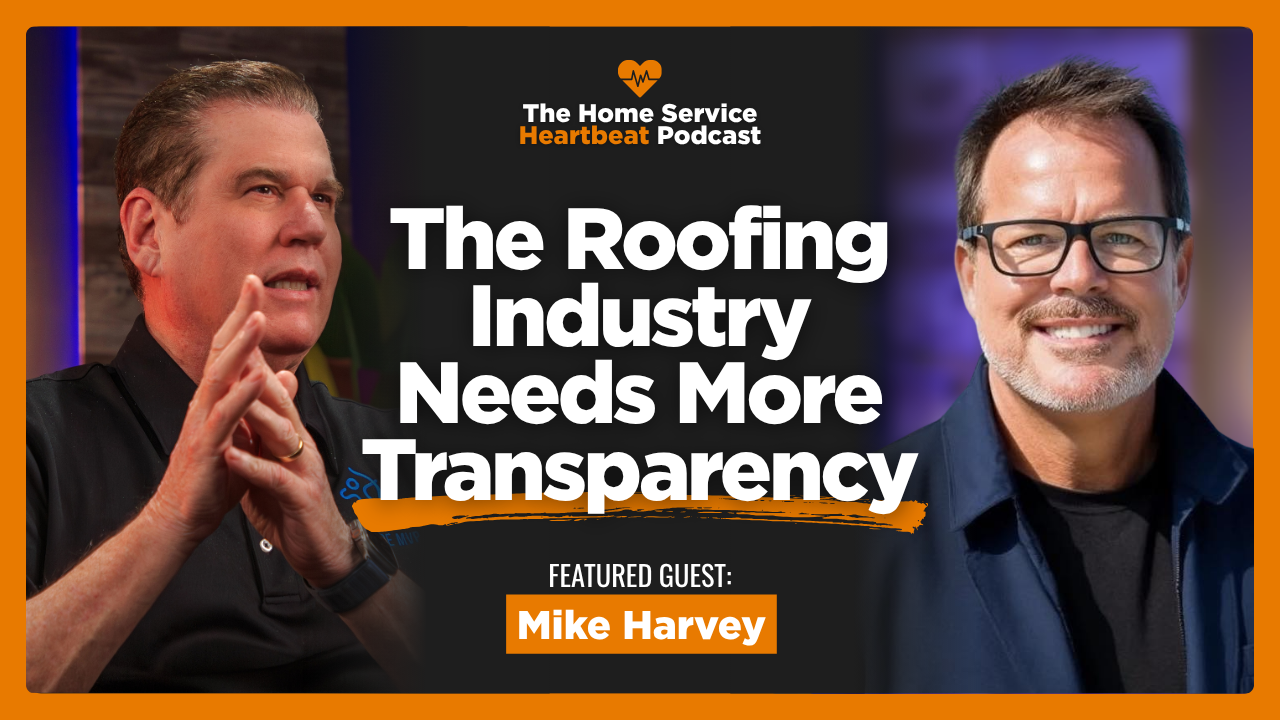
Hear my complete conversation with Mike Harvey of SkyeVantage on the Home Service Heartbeat Podcast.
Mike explains why he decided to challenge the traditional roofing sales model, how SkyeVantage uses technology and transparent pricing, and why he believes homeowners should have more information and control when making a major home improvement decision.
Want Your Technicians to Help Customers Choose Without Pressure?
That's exactly what we practice at Service MVP Total Immersion.
Technicians learn how to connect with customers, discover what's important, communicate what they found, build meaningful options and help homeowners make decisions using Pure Motive - without becoming attached to which option the customer chooses.
