By Joe Crisara, Author of What Should We Do? and Co-Founder of Service MVP
Short answer
What makes a homeowner trust one technician more than another?
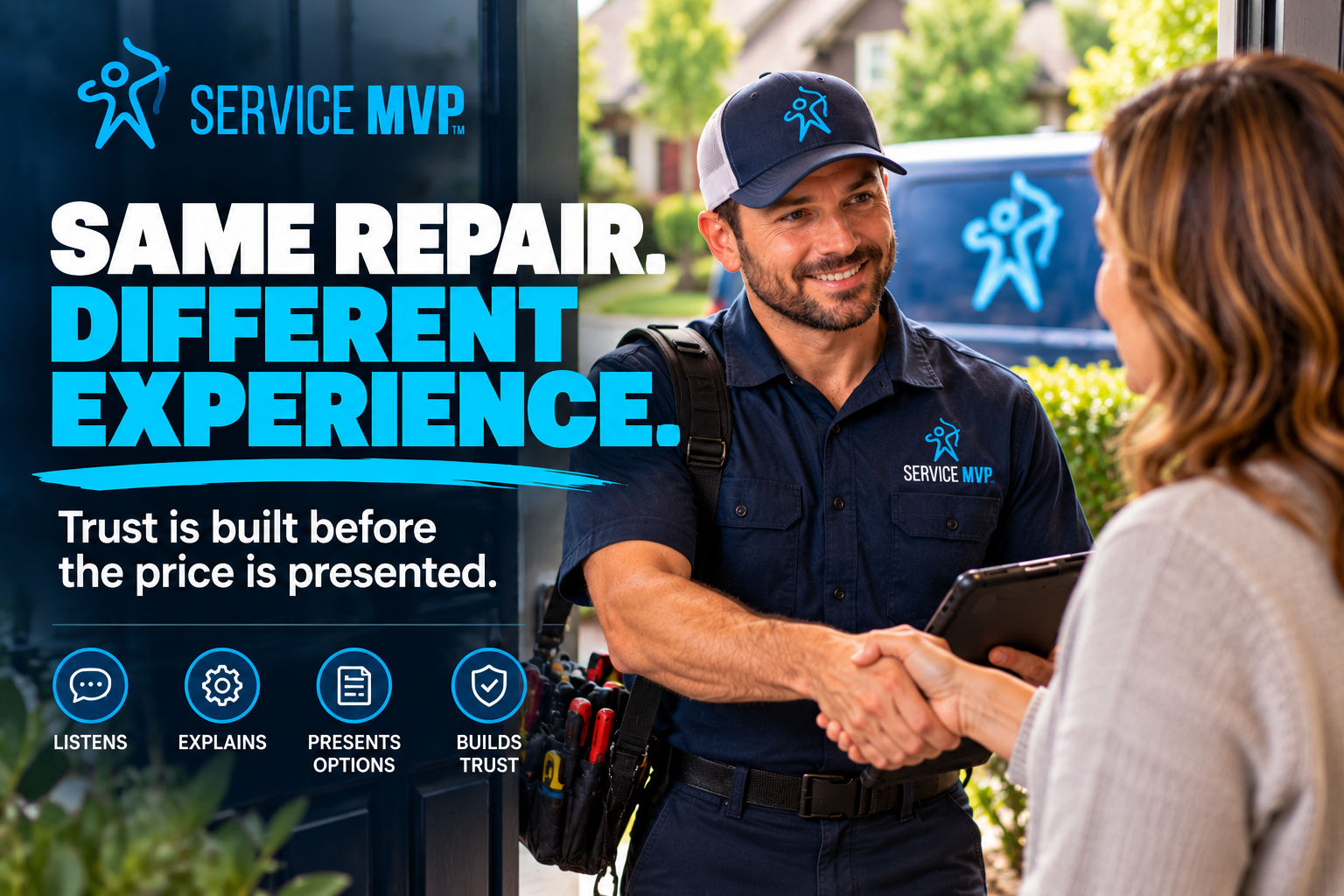
Homeowners trust service technicians who listen carefully, explain what they're doing, demonstrate competence, and help customers understand their choices without pressure. Technical ability matters, but customers usually can't evaluate the technical quality of an HVAC repair, plumbing diagnosis, or electrical service themselves. They judge the experience through the technician's behavior, communication, transparency, and professionalism.
And here's something every home service business owner needs to understand: Trust isn't something your technicians should have to ask customers for. It's something they should demonstrate throughout the service call.
Two Technicians. Same Repair. Different Customer Experience.
Imagine two HVAC technicians arriving at different homes with the same problem.
Both technicians are experienced.
Both diagnose the equipment correctly.
Both recommend the same repair.
And both charge the same price.
But one homeowner feels completely comfortable moving forward.
The other hesitates, questions the recommendation, and says they want to think about it.
Why?
It may have nothing to do with the repair.
It may have everything to do with the experience leading up to the recommendation.
I've spent years teaching technicians how to connect with homeowners, and one thing I've learned is that people need to feel understood before they're comfortable making important decisions.
That doesn't mean technicians should become entertainers or professional salespeople.
It means they need to learn how to create a customer experience that builds confidence.
Because trust is built long before you present the price.
1. Trust Starts Before the Technician Arrives
Think about what the homeowner experiences before the service call.
They may have a broken air conditioner.
A leaking pipe.
An electrical problem.
Or equipment that has stopped working unexpectedly.
They're already dealing with uncertainty.
Then they call your company.
Was the person answering the phone friendly?
Did they listen?
Did they explain what would happen next?
Did your company confirm the appointment?
Did the technician arrive when promised or communicate a delay?
All those moments contribute to how the homeowner feels when the technician walks through the door.
If the office has already created confusion or frustration, the technician may have to rebuild trust before the diagnosis even begins.
That's why customer service isn't just the technician's responsibility.
It's a company-wide process.
We've discussed this in Your Marketing Worked. Did Your CSR Lose the Call?.
The customer experience starts with the first interaction, not the first repair.
2. Listen Before You Diagnose
Here's something I want every technician to remember.
The homeowner knows things about the problem that you don't.
They know when it started.
They know what they've noticed.
They know whether it's happened before.
And they know what concerns them most.
But technicians sometimes walk into a home already thinking about what might be wrong.
They see the equipment.
They recognize a symptom.
And they're ready to start troubleshooting.
Technical knowledge is valuable.
But don't let that knowledge prevent you from listening.
Before you begin, ask questions.
"What have you noticed?"
"When did this start happening?"
"Has anything like this happened before?"
"What concerns you most about the situation?"
Then listen.
Don't interrupt.
Don't immediately jump to a solution.
Let the homeowner explain what they're experiencing.
A customer who feels heard is more likely to feel comfortable with the person trying to help them.
3. Explain What You're Doing Without Overwhelming the Customer
Imagine visiting a professional because you have a problem you don't understand.
They examine the situation, use terminology you're unfamiliar with, and announce that you need an expensive solution.
How would you feel?
Probably uncertain.
That's what happens when technicians communicate in technical language without helping homeowners understand what it means.
Your customer doesn't necessarily know what a capacitor does.
Or why a heat exchanger matters.
Or how a pressure problem affects a plumbing system.
And they shouldn't have to.
That's your technician's area of expertise.
But the technician needs to translate that expertise into language the customer can understand.
Explain what you're checking.
Explain why it matters.
Show the homeowner what you've discovered when appropriate.
And connect the findings to the problem the homeowner originally described.
You don't need to give a technical lecture.
You need to help the customer understand the situation.
The goal isn't to impress homeowners with what you know. It's to help them feel confident about what you've found.
4. Don't Make the Customer Feel Like They're Being Sold
One of the fastest ways to lose trust is to make a homeowner feel pressured.
Think about what happens when a technician finishes a diagnosis and immediately announces:
"You need to replace this."
The homeowner may wonder:
Is that really necessary?
Are there other options?
Could it be repaired?
What happens if I wait?
Am I being pushed toward the most expensive solution?
Even when the technician's recommendation is technically correct, the customer may feel uncomfortable because they weren't included in the decision.
That's why we teach technicians to present meaningful choices.
Sometimes the choices involve different repairs.
Sometimes they involve repair versus replacement.
Sometimes they involve addressing the immediate problem or correcting related concerns.
The available options depend on the equipment, the diagnosis, and what is technically appropriate.
But the principle remains the same.
Give homeowners the information they need to choose instead of making them feel that the choice has already been made for them.
We explain this approach in Stop Giving Homeowners One Price: Why Service Technicians Should Present Options.
5. Be Honest About What You Know and What You Don't
Here's something technicians sometimes misunderstand.
They think they need to have an immediate answer to every question.
They don't.
A homeowner asks something unexpected.
The technician isn't certain.
And instead of admitting they need to verify the answer, they guess.
That's dangerous.
Because if the answer turns out to be wrong, the customer may question everything else the technician said.
There's nothing unprofessional about saying:
"That's a good question. I want to verify that before I give you an answer."
Or:
"Let me check the manufacturer's specifications so I can make sure I'm giving you accurate information."
That's professionalism.
Customers don't need technicians who pretend to know everything.
They need technicians who care enough to get it right.
Confidence doesn't mean always having the answer. Sometimes it means knowing when to stop and verify.
6. Small Actions Can Make a Big Difference
Think about the little things that communicate professionalism.
Arriving prepared.
Introducing yourself.
Wearing appropriate protective coverings when needed.
Respecting the customer's property.
Keeping the work area organized.
Explaining what will happen next.
Cleaning up after the repair.
Following through on promises.
None of those things requires extraordinary technical skill.
But together, they create an impression.
And that impression matters.
Imagine two technicians who perform identical repairs.
One leaves tools scattered around the home, rushes through the explanation, and disappears after collecting payment.
The other protects the work area, communicates clearly, and makes sure the homeowner understands what was completed.
Which one would you be more comfortable inviting back?
That's why I tell contractors that the customer experience is much bigger than the repair itself.
7. Make Your Recommendations Easy to Understand
Trust can disappear when customers feel confused.
And one of the most common places that happens is during the presentation of solutions.
A technician may understand every detail of a repair.
But if the homeowner doesn't understand what they're buying, they may hesitate.
That's why your team needs to explain the differences between available options.
What does each solution address?
What are the benefits?
What are the limitations?
What happens if the customer chooses the lower-cost approach?
What additional protection or improvements come with another option?
Your technician should be able to answer those questions clearly.
And the homeowner should have enough information to make a decision based on their priorities.
This is one reason we emphasize communication training alongside technical training at Service MVP.
The technician isn't simply presenting a price.
They're helping the homeowner understand a decision.
8. Trust Doesn't End When the Customer Says Yes
Some technicians think their job is finished once the customer approves the work.
But the experience continues.
Did the technician complete what was promised?
Did they explain the work afterward?
Did they leave the home in good condition?
Did they answer any remaining questions?
Did the company follow through on the warranty or service commitments?
And if something goes wrong, how does the company respond?
A customer who approves a repair hasn't given you permanent trust.
They've given you an opportunity to demonstrate that their decision was a good one.
That's why consistency matters.
Every promise your company makes creates an expectation your team needs to fulfill.
9. You Can't Build Trust With a Script Alone
Here's where training becomes important.
You can teach technicians what questions to ask.
You can give them a process for explaining a diagnosis.
You can show them how to present options.
But none of those skills will feel natural without practice.
A technician who is worried about remembering the next line in a script may stop listening to the customer.
And that defeats the purpose.
Training should help technicians understand why they're asking questions and how to respond naturally to what they hear.
That's why we believe in practice, coaching, and accountability.
The goal isn't to create technicians who all sound alike.
It's to create technicians who consistently make customers feel heard, informed, and respected.
As we explain in Why Knowing What to Say Isn't Enough: Your Technicians Need to Practice It, communication skills need to be developed through repetition.
10. Managers Need to Coach the Customer Experience, Not Just Revenue
If you want to build a company customers trust, you need to measure more than sales.
Of course revenue matters.
So do average tickets and closing percentages.
But those numbers don't tell you everything about the experience.
Ask your technicians:
"What did the homeowner say was important to them?"
"How did you explain your findings?"
"What options did you present?"
"Did the customer understand the differences?"
"Was there a question you struggled to answer?"
"What would you do differently next time?"
Those questions help managers identify the behaviors that create better customer experiences.
And when you coach those behaviors consistently, you're developing something more valuable than a technician who occasionally produces a large ticket.
You're developing a professional who knows how to earn customer confidence.
The Best Technicians Don't Demand Trust. They Demonstrate It.
Homeowners don't have the same technical knowledge your technicians do.
That's why they call you.
They're trusting your company to help them understand a problem and make the right decision for their situation.
That trust is a responsibility.
It shouldn't be taken for granted.
And it shouldn't be used to pressure customers into buying something they don't need.
Instead, teach your technicians to listen carefully, diagnose thoroughly, explain clearly, and offer meaningful choices.
When you do those things consistently, you give customers reasons to feel confident.
And confident customers are more likely to become loyal customers.
The goal isn't simply to get the homeowner to say yes today. It's to become the company they feel comfortable calling again tomorrow.
Build a Team Homeowners Feel Confident Calling
At Service MVP, we help HVAC, plumbing, electrical, and other home service businesses develop technicians who combine technical expertise with exceptional customer communication.
Our Total Immersion training helps technicians build the skills to connect with homeowners, perform thorough diagnoses, and present meaningful choices.
And our Service MVP Coaching programs help managers reinforce those skills through practice, feedback, and accountability.
Because great service isn't just about fixing the problem.
It's about giving homeowners confidence in the people they invite into their homes.
